Composing your Conference Paper and Paper Submission
Find key submission details below! Review categories, guidelines, themes, quality standards, and templates. Submit your original, unpublished manuscript as a Full Paper (categories 1–3), Work-in-Progress, Doctoral Symposium Paper (category 4), or Workshop (category 5). All submissions must be in English.
Manuscript Pre-Submission Checklist
Conference Suitability Analysis
Review the conference's call for papers, scope, and topics list to determine if your manuscript aligns with the specified categories, themes and research areas. Ensure that your paper addresses the key topics highlighted by the conference and meets the relevance criteria. This analysis will help you decide if the conference is the appropriate venue for your submission. Explore the details below!
Call for Papers: Summary
EDUNINE2026 will be a hybrid conference on Education in Engineering, Computing, and Technology, featuring both online and in-person presentations at Tecnológico Monterrey in Mexico City, Mexico. Authors can present either in person or online, with both formats valued equally. All participants will have access to all sessions.
Authors are invited to submit original contributions in English, which will undergo a rigorous peer-review process, in the following categories aligned with the field of interest of the IEEE Education Society and within the scope of IEEE.
Submission Categories
Category 1: Teaching Techniques
Implemented teaching techniques, classroom experience reports, or pedagogical tools (as full papers or work-in-progress papers)
Category 2: Curricula & Programs
New curricula and educational program proposals, including regional or national adaptations (as full papers)
Category 3: Educational Research
Educational research papers (as full papers)
Category 4: Research-in-Development
RID papers for doctoral students (as doctoral symposium papers)
Category 5: Workshops
Workshop proposals
Accepted papers will be included in the IEEE digital library, IEEEXplore®, which partners with Google, Elsevier, Web of Science, and others. Oral presentations will be in English, Portuguese, and Spanish.
The conference will also feature pre-workshops, plenaries, panels, hybrid social events and a pre-conference cultural immersive tour.
Scope and Areas of Interest
This conference serves as a central hub for researchers and educators to share cutting-edge research and best practices in Engineering, Technology, and Computing (ETC) Education. We encourage diverse submissions that explore the field through interdisciplinary and theoretical lenses.
Thematic Relevance
Papers should address the conference topics, including innovations, trends, challenges, and solutions in relevant fields that encompasses the IEEE Education Society's field of interest which are the theory and practice of education and educational technology related to the effective delivery of knowledge in disciplines that fall within IEEE's scope, such as engineering, computing, and technology-related fields.
Important Note
While interdisciplinary and closely related topics may be a wonderful addition to a conference for publication in IEEE Xplore®, the papers themselves should be in an IEEE field of interest. Challenges arise when non-IEEE fields of interest are included.
Responding to a Dynamic Landscape
This conference acknowledges the rapid evolution of ETC education, particularly at the undergraduate level. We welcome discussions on emerging responsibilities in the field, such as:
K-12 & Continuing Education
Expanding ETC education to K-12 and continuing education programs
Student Diversification
Promoting student body diversification to reflect population demographics
Historical & Social Context
Integrating the history and societal impact of technology into curriculum
Technological Literacy
Cultivating technological literacy for non-engineering audiences
Interdisciplinary Focus
While the core focus is on ETC education, submissions from related fields are welcome. This includes education in other engineering branches, physical sciences, life sciences, or applied mathematics, as long as they demonstrate significant relevance to ETC education.
Emphasis on Pedagogy
Submissions involving digital technology should primarily focus on its pedagogical application and broader educational implications. Papers on software/hardware implementation should prioritize the educational context and learning outcomes, not just technical details. Detailed implementation architecture is best suited for online resources (URLs) and not the paper itself.
Scope Considerations
Outside Conference Scope
Papers on non-technical subjects like tourism, philosophy, art, etc., typically fall outside the conference scope.
EDUNINE Topics
This conference brings together educators and researchers to explore innovative approaches to teaching and learning in Engineering, Technology, and Computing (ETC) Education. The following thematic streams highlight key areas of discussion, fostering collaboration and knowledge exchange to equip educators with the tools and strategies to create engaging, inclusive, and future-proof learning environments for all students.
I. Fostering Innovation and Inclusion in ETC Education
- Engaging Pedagogies & Learning Activities
- 21st Century Skills & Competencies
- Inclusive Learning Environments
- Lifelong Learning & Professional Development
- Strategies for Increased Women Participation
- Interdisciplinary & Experiential Learning
- Multicultural & Indigenous Perspectives
- Language Learning in Technological Contexts
- Research & Innovation in the ETC Classroom
- Sustainability & Ethical Considerations
- Adapting to Emerging Technologies
- Learning Continuity in Challenging Environments
II. Designing Effective Learning Spaces in ETC Education
- Blended & Technology-Enhanced Learning Environments
- Accessible & Inclusive Learning Environments
- Flexible & Open Learning Spaces
- Minimizing Educational Disruption
- Engaging Hybrid Learning Design & Activities
- Educational Technologies for Equity & Inclusion
- Online, E-learning, & Mobile Learning Platforms
- MOOCs & Their Impact on ETC Education
- Smart Classrooms & Immersive Learning Technologies
- Game-Based Learning & Gamification Strategies
- X-Reality & the Future of Learning Environments
- STEM Learning Spaces for All Ages
- Assistive Technologies for Diverse Learners
III. Strengthening Educational Organization & Practices
- Curriculum Design & Development Strategies
- Accreditation & Quality Assurance Processes
- Assessment & Evaluation for Learning
- Ethical Dilemmas in ETC Education
- Responsible AI Integration in ETC Education
- Promoting STEM Education in K-12 & Higher Education
- Effective Teacher Education & Professional Development
- Faculty Support Systems & Mentorship Programs
- Bridging the Research-Practice Gap in ETC
- Learner Support Strategies & Retention Initiatives

Determine your Manuscript Category and Type
This section outlines the submission categories for EDUNINE2026. Authors are encouraged to submit original, unpublished work aligned with the conference's scope and topics.
General Information on Paper Categories and Submission Types
Author Ethics and Responsibilities:
We emphasize upholding ethical research and writing practices:
- Submit original, unpublished work by the listed authors only.
- Ensure the paper is not under review elsewhere.
- Review IEEE guidelines on authorship, citation, plagiarism, data integrity, and originality. IEEE Author Center for Conferences: Ethics
- Review your manuscript to ensure that it aligns with the conference's scope and the recommended topics provided on this webpage. Manuscript Pre-Submission Checklist
Citation Practices:
- Proper citation of sources is crucial for ethical and academic writing. The conference mandates the IEEE style for citing references. IEEE Reference Guide
- Ensure all sources are properly cited to avoid plagiarism and self-plagiarism.
Paper Formatting:
- All submissions must adhere to the conference paper formatting guidelines, as described in the "Mandatory Conference Paper Templates" section on this webpage. Manuscript Templates
- Papers not meeting the formatting guidelines required for publication will be rejected.
AI-Generated Text Disclosure:
- Authors using AI-generated text must disclose this in the paper's acknowledgement section and cite the specific AI system employed (Interim Instructions by IEEE Publications, February 2023).
IEEE Paper Writing Requirements:
- All papers must be written in English and adhere to IEEE's publication requirements for the IEEE Xplore® digital library. These requirements include using proper English language style and formatting according to guidelines outlined in the IEEE Editorial Style Manual.
- Papers not meeting the standard of English required for publication will be returned for revision.
EDUNINE Categories and Content of Manuscripts
The conference accepts various categories of manuscripts, each with specific requirements aligned with the conference scope (see Conference Suitability Analysis for details). Proper adherence to these guidelines ensures consistency and facilitates the peer review and publication processes. Here is an overview of the accepted categories and their type, with links to the expected paper content. In the next section, formatting guidelines for each type are provided.
Category 1: Implemented Teaching Techniques, Classroom Experience Reports, and Pedagogical Tools
This category invites evidence-based reports of instructional techniques, pedagogical tools, or classroom strategies that have been fully implemented and evaluated in authentic educational settings.
EDUNINE are specifically interested in the educational impact and effectiveness of these tools or approaches in practice—not in the technical or developmental details of the tools themselves. Submissions should focus on how the intervention was used pedagogically, its outcomes, and what educators can learn from it.
A Category 1 Paper undergoes a double-blind peer review process.
Content must include
- A clear and detailed description of the implemented teaching method, tool, or activity;
- A comprehensive explanation of the instructional context, such as course type, student population, and institutional environment;
- Empirical evidence of effectiveness and a critical analysis of results, including what was learned, how the intervention affected teaching and learning, and its broader implications;
- Reflective insights that help other educators understand how they might adapt or benefit from the reported experience;
- Clear situating within prior literature, showing how the intervention builds on, complements, or challenges existing educational research and practices.
Evaluation will prioritize
- Clarity and specificity of the instructional intervention
- Rigor and transparency in the collection and interpretation of results
- Relevance and educational impact
- Situating the work within relevant prior research and literature
- Transferability and usefulness to other educators
Important:
Papers describing ongoing interventions, initial uses without sufficient evidence, or results that are preliminary or not statistically significant should be submitted as Work-in-Progress (WIP) papers, where early-stage insights are welcomed.
Submissions that focus primarily on the design, development, or technical aspects of educational tools or platforms—rather than their effective pedagogical application—will not be considered.
Manuscripts lacking real-world implementation or results analysis will be rejected.
Category 2: New Curricula and Educational Program Proposals (Including Regional and National Adaptations)
This category invites innovative curriculum designs, educational programs, and pedagogical frameworks that are ready for implementation or are in the early stages of development. We also welcome submissions that focus on regional or national adaptations of curricula, exploring how educational strategies and frameworks have been implemented or adapted in different cultural, social, and educational contexts.
Submissions should focus on practical solutions that address current educational challenges and promote enhanced teaching and learning in engineering, computing, and technology education. These may include national policy changes, regional adaptations of curricula, or cross-country comparisons of educational programs.
A Category 2 Paper undergoes a double-blind peer review process.
Content should include:
- Detailed descriptions of the curriculum, program, or framework, including its educational goals and pedagogical approach;
- Clear implementation plans, outlining how the program or curriculum has been or will be carried out in real-world educational settings;
- Case studies or examples of how the curriculum or program has been adapted to suit specific regional or national educational contexts, showing the impact on students, institutions, or countries involved;
- An analysis of challenges and adaptations required when implementing curricula or programs in diverse educational settings, including cross-country comparisons if applicable;
- Expected outcomes, including how the proposed program or curriculum will improve student learning, engagement, or achievement;
- An alignment with current educational trends or research, showcasing how the proposal addresses existing needs or gaps in the field.
Evaluation will prioritize:
- Clarity and practicality of the proposed curriculum or program
- Alignment with educational goals and outcomes
- Potential impact on student learning and teaching effectiveness
- Relevance to current trends and challenges in education, including regional or national contexts
- Effectiveness of adaptations or comparisons in diverse educational settings
Important:
This category is not intended for position papers or conceptual proposals that are primarily opinion-based or speculative. Instead, it is designed for concrete proposals with a clear path to implementation or those already in the process of being developed, piloted, or adapted across different regions or countries.

Category 3: Educational Research Papers
This category invites rigorous, empirical research studies that contribute to the advancement of educational theory, practice, and policy. Submissions are welcomed on any topic related to engineering, computing, and technology education, including, but not limited to, pedagogical approaches, teaching strategies, assessment methods, curriculum development, and student engagement.
The primary focus should be on empirical research that addresses specific educational challenges, tests new hypotheses, evaluates the effectiveness of teaching interventions, or provides insights into improving educational outcomes across diverse contexts.
A Category 3 Paper undergoes a double-blind peer review process.
Content should include:
- Clear research objectives: Define the research question(s) or hypotheses that the paper aims to investigate, based on key educational issues in the field.
- Literature review: Situate the study within the existing body of research, identifying gaps, trends, or opportunities for further exploration, and providing a solid foundation for the research.
- Methodology: Provide a comprehensive description of the research design and methods employed (qualitative, quantitative, or mixed methods). Detail the data collection process, the research instruments used (e.g., surveys, assessments, interviews), and the study population or sample.
- Data analysis and results: Present the results of the research, including any statistical analysis or qualitative insights derived from the collected data. Use clear visuals or tables where appropriate to enhance the presentation of findings.
- Discussion and interpretation: Analyze the results in the context of the research objectives. Discuss the implications of the findings for educational theory, practice, and policy, and consider how they contribute to improving teaching methods, student learning, and overall educational outcomes.
- Conclusions and recommendations: Summarize the key findings of the study and provide actionable recommendations for educators, institutions, or policymakers, based on the research results. Highlight areas for further investigation or research gaps.
Evaluation will prioritize:
- Clarity of research questions and objectives
- Robust and transparent methodology, with a strong rationale for chosen methods
- Quality of data analysis and the relevance of findings to the field of education
- Implications for educational practice, theory, and policy
- Contribution to advancing knowledge in the field of education.
Important:
Submissions must be based on empirical data and should contribute new knowledge or insights into educational practices, with clear implications for improving education in engineering, computing, technology, or related fields.
Category 4: Research-in-Development (RID) for Doctoral Students (Doctoral Symposium Papers)
This category invites submissions from doctoral students who are engaged in the early or intermediate stages of their dissertation research. The goal is to provide a scholarly venue where doctoral candidates can present their research-in-development, receive constructive feedback, and engage with the academic community as they refine their work.
Submissions in this category should reflect serious academic effort and be grounded in educational theory or empirical frameworks. While final results are not expected, papers should demonstrate a clear research direction and academic merit.
A Category 4 Paper undergoes a single-blind peer review process.
Content should include:
- Research problem or question: Clearly articulate the educational issue or problem the research addresses, providing motivation for the study within the broader field of engineering, computing, or technology education.
- Preliminary literature review: Situate the proposed research within relevant academic literature, highlighting gaps or areas of contention that the doctoral study intends to explore or resolve.
- Theoretical framework: Outline any theoretical perspectives or models guiding the inquiry and shaping the research design.
- Research design and methodology: Describe the planned or ongoing methodology, including type of study (qualitative, quantitative, or mixed methods), intended population or sample, data collection methods, and rationale for design choices.
- Preliminary results or observations (if available): Share any early findings or insights that have emerged, or discuss anticipated outcomes and key assumptions.
- Expected contributions: Discuss how the research is expected to contribute to the field, including implications for practice, theory, or policy, even if preliminary.
- Next steps and challenges: Reflect on the current state of the research, challenges encountered, and plans for future development or refinement of the study.
Evaluation will prioritize:
- Relevance and clarity of the research question
- Grounding in prior literature and theory
- Appropriateness and coherence of the research design
- Potential contribution to educational research or practice
- Academic rigor and level of maturity appropriate for doctoral research
Important:
Submissions must represent genuine doctoral research efforts in progress. They should go beyond conceptual proposals by including a structured design and connection to literature, even if data collection and analysis are still underway.

Category 5: Workshop Proposal Papers
This category invites submissions from individuals or teams interested in leading interactive workshops designed for educators, researchers, and professionals. Workshops provide an opportunity to share expertise through engaging, hands-on sessions that emphasize active learning, reflection, and dialogue. These sessions are intended to deepen participants’ understanding of a specific topic and provide practical tools, resources, or strategies applicable to their teaching, research, or academic development.
Workshops will be conducted online on the Sunday preceding the conference, in accordance with university policies for EDUNINE2026. They may span 1 to 4 time slots, with each slot lasting 1 hour and 30 minutes. Proposals must represent original work not previously published or under review elsewhere.
A Category 5 Paper undergoes a single-blind peer review process.
Proposals should include:
- Workshop Overview: Clearly describe the purpose, objectives, and scope of the workshop. Outline the central themes, topics to be addressed, and the relevance to the community of engineering, computing, or technology education. Mention any tools, technologies, or participant experiences to be featured during the session.
- Learning Activities: Provide a detailed outline of the structure and sequence of workshop activities. Describe how interaction will be facilitated (e.g., breakout rooms, collaborative tools, simulations), and how hands-on engagement will be integrated. Specify the total duration and distribution of time across activities.
- Target Audience: Identify the intended participants and their expected background knowledge. Indicate the level of the workshop (e.g., beginner, intermediate, advanced) and any prerequisites, if applicable.
- References: Include citations to relevant literature, models, or resources referenced in the proposal. This section should demonstrate theoretical or practical grounding for the workshop's content and structure.
- Presenter Bios: Provide brief biographies (up to 200 words each) for all presenters, including relevant experience, institutional affiliations, and areas of expertise. Presenter photos are optional but encouraged.
Evaluation will prioritize:
- Relevance and clarity of the workshop objectives
- Level of engagement and interactivity planned
- Appropriateness for the intended audience
- Connection to educational practice or research
- Organization, feasibility, and clarity of the proposal
- Qualifications and experience of the presenters.
Important:
Workshop proposals should demonstrate clear pedagogical goals, structured activities, and relevance to the educational community. Proposals lacking interactive elements or based solely on lectures will not be prioritized.
EDUNINE Paper Types and Formatting Guidelines
EDUNINE accepts several types of papers, each aligned with specific submission categories. The formatting requirements depend on the type of paper, which reflects the maturity and purpose of the work presented.
The following sections provide detailed formatting guidelines and submission requirements for each paper type. Authors should ensure they use the correct format based on their chosen category.

Full Paper Formatting Guidelines
The Full Paper Format is intended for mature, well-developed research results. This format applies to:
- Category 1: Teaching Techniques, Classroom Experience Reports, Pedagogical Tools
- Category 2: New Curricula and Educational Program Proposals
- Category 3: Educational Research
Required Format
- Abstract: max 150 words
- Length: 4–6 pages
- Template: IEEE format
- English: formal academic style

Work in Progress (WiP) Guidelines
Work in Progress Papers are for ongoing projects with preliminary results or early-stage research. Applies to:
- Category 1: Teaching Techniques, Classroom Reports, Pedagogical Tools
- Category 2: New Curricula and Program Proposals
- Category 3: Educational Research
Required Format
- Title: Start with “Work in Progress:”
- Abstract: max 150 words
- Length: 2–4 pages
- Template: IEEE format
- English: formal academic style
Doctoral Symposium Guidelines
Venue for doctoral students to share work in progress and receive feedback. Required for:
- Category 4: Research-in-Development (RID)
Required Format
- Title: Start with “DS:”
- Abstract: max 150 words
- Length: up to 4 pages
- Template: IEEE format
- English: formal academic style
Workshop Proposal Guidelines
Workshop Papers describe interactive, hands-on sessions for skill-building and engagement. Applies to:
- Category 5: Workshop Proposals
Formatting
- Title: Start with “Workshop:”
- Abstract: max 150 words
- Length: Full Paper (6 pages) or Short Paper (2 pages)
- Template: IEEE format
- English: formal academic style
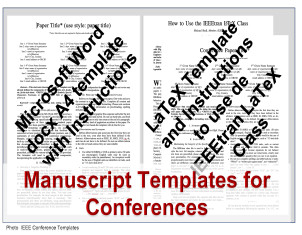
Mandatory Conference Paper Templates
The IEEE EDUNINE Conference employs standardized templates to ensure uniformity and coherence in the published proceedings. These templates are mandatory and provided by IEEE, offering detailed guidance on composing and formatting your research paper according to IEEE Xplore publication requirements.
Download TemplatesSelecting the Appropriate Template
For seamless manuscript preparation, authors are required to utilize one of the following IEEE conference templates:
- Microsoft Word (.docx) – A4 paper size
- LaTeX format
Download the templates:
IEEE Conference TemplatesCollaborative Writing with Overleaf
Overleaf is an ideal platform for collaborative academic writing, supporting both LaTeX and rich-text formats. It includes IEEE templates and offers helpful resources like guides, tutorials, and webinars for all experience levels.
Visit IEEE Author CenterMastering Microsoft Word Templates: Essential Tips and Tricks
Using the IEEE Word template ensures consistent formatting and simplifies collaborative writing.
Benefits of the Template:
- Comes with predefined styles for sections, figures, tables, equations, and references.
- Serves as both a guide and example, showing correct formatting directly in the document.
- Can be reused to create new IEEE papers, streamlining the writing process..
This guide offers options for both individual paper creation and collaborative writing using the template.
How to Use It:
A) Developing an Individual IEEE Conference Paper:
Make a copy of the .docx template and replace the text with your own, using “Paste and Match Formatting.” Use the Styles Panel to format your content. Important: Delete all instructional text before submitting, or your paper may be rejected.
B) Creating a Microsoft Template (.dotx):
Create a .dotx template file so all authors can use the same styles and formatting. This improves consistency and ensures compliance with IEEE standards.
How to create a Microsoft Template (.dotx):
- Open the Document: Launch Microsoft Word and open the conference-template-a4.docx file to create a template with the formats and styles for formatting your paper.
- Operating System Differences: Instructions may vary by operating system and Word version—refer to Microsoft support if needed.
- Writing Your Paper: Start by replacing the template text with your own content, using the predefined styles shown in the Styles Panel for headings, lists, tables, and other elements. Although it may take time, using these styles ensures your paper meets the required formatting for the conference. Make sure to remove all instructional text before submission, as failure to do so may result in rejection.
Create Professional Research Papers: LaTeX Template for Scientific Writing
This guide provides instructions for formatting your paper using the official IEEE LaTeX template:
Before You Begin:
- Download the Template and select conference mode.
- Install required packages as indicated in the template documentation.
- Choose a LaTeX editor, such as Overleaf (online) or TeXstudio/TeXworks (offline).
Formatting Your Paper:
- Follow the predefined structure (abstract, sections, conclusion, references).
- Use the template's fonts, spacing, and margins without modifying them.
- Format figures, tables, equations, and references using the provided commands.
- Use the double-column layout, as shown in the sample file.
Additional Tips:
- Compile regularly (e.g., with pdflatex) to check formatting and fix errors.
- Refer to the template documentation for examples and syntax.
- Explore online LaTeX guides for extra support.
Additional Customizations:
- Add author info only for Workshop Proposal or DS Manuscripts.
- Use section headings, captions, and IEEE citation styles.
- Define custom commands if needed.
For specific details on these customizations, refer to the template documentation and online resources catering to IEEE LaTeX formatting.
By following these steps and using the template features, you'll ensure your paper meets IEEE formatting standards effectively.
Important Submission Guidelines:
To ensure a successful submission for the conference, please follow these important guidelines closely. They will help you present your work in a clear and consistent format, and ensure a smooth review process. Please read through this page carefully for a step-by-step guide on composing your conference paper.
- Scope and Topics: Double-check that your paper aligns with the conference's focus areas.
- Paper Type: Choose the appropriate category: full paper, WIP, workshop proposal, or Doctoral Symposium submission.
- Language: All submissions must be written in clear and standard English.
- Page Limits: Adhere to the designated page limit for your chosen paper type (details available on the submission platform).
- Template: All written content submissions must strictly follow the formatting guidelines outlined in the conference templates.
Before submitting your paper, we encourage you to visit the peer-review webpage: Peer Review Process and Notification on this website. This resource provides valuable information about the evaluation process and helps ensure a clear understanding of how your paper will be reviewed.
Please note
Please note that EDUNINE2026 only accepts electronic submissions via EDUNINE2026 SUBMISSION SYSTEM system; email submissions will not be accepted.
EASY CHAIR
Author Registration and Paper Submission
To register to Easy Chair: visit the EasyChair registration page .
- Create an EasyChair account and upload the manuscript in PDF using the IEEE templates.
- If the conference is double-blind, anonymize the paper.
- Fill in title, authors, abstract, and keywords in EasyChair.
Video Tutorials: Watch the following videos for a step-by-step guide on using
EasyChair.
If you want to know more,
visit the EasyChair YouTube
channel.
Once your paper is validated in this first stage, go to this section to continue with the
submission process: